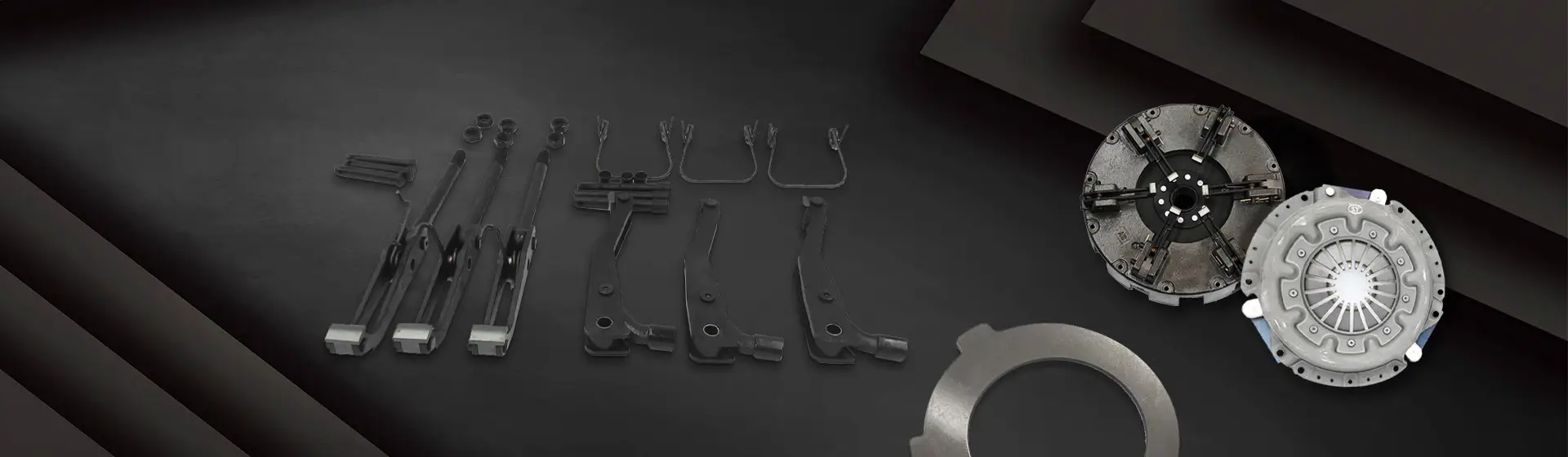
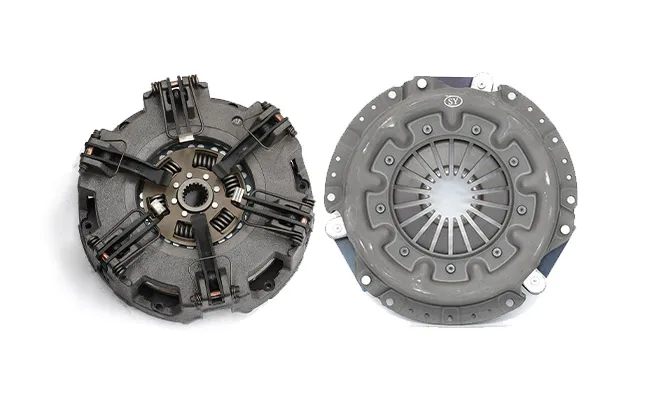
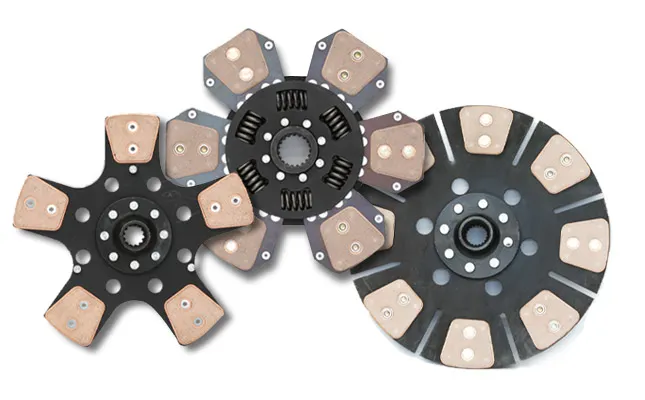
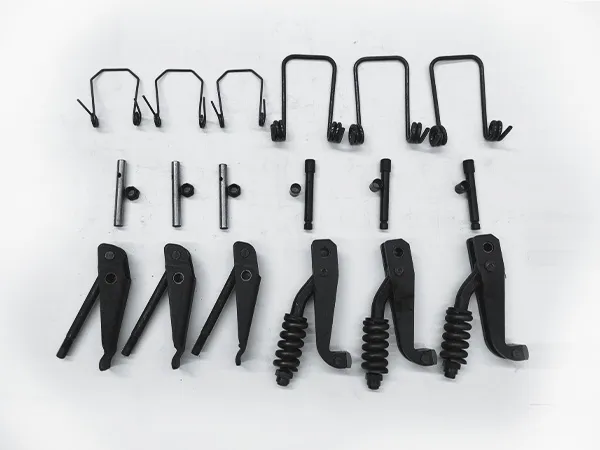
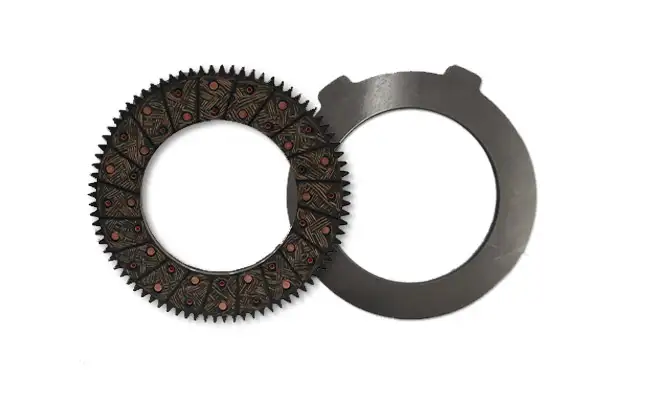
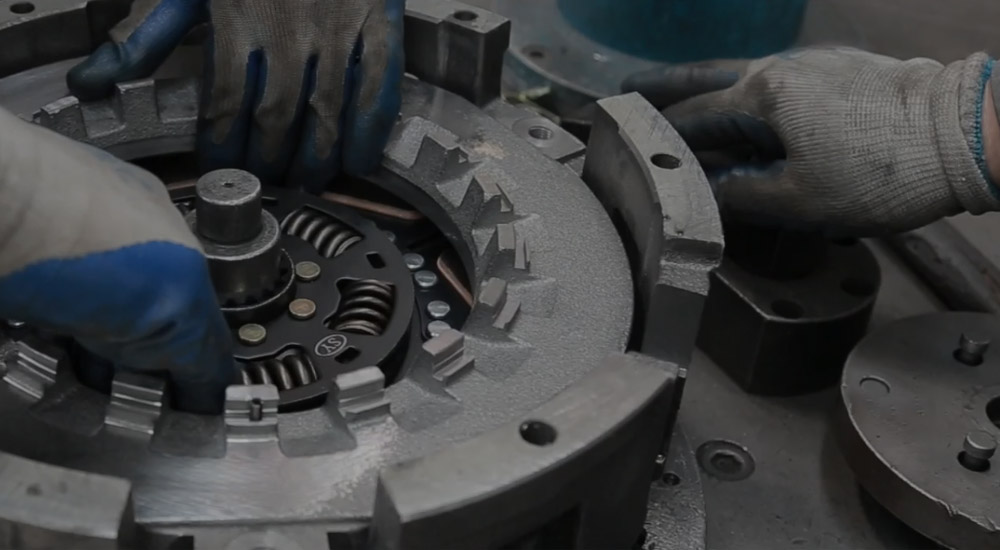
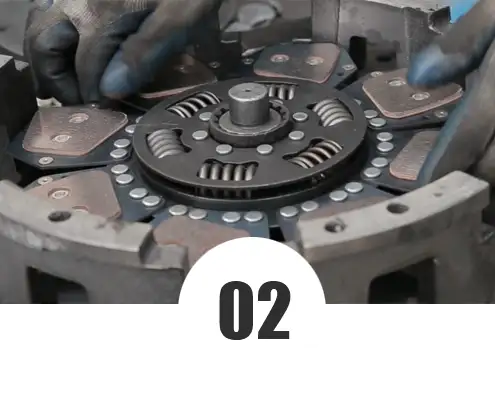
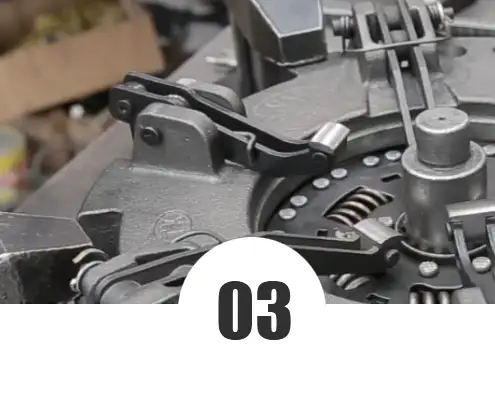
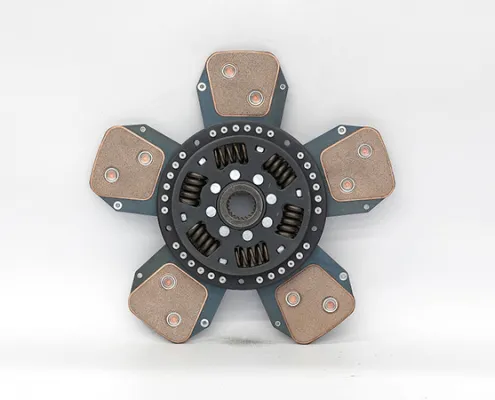
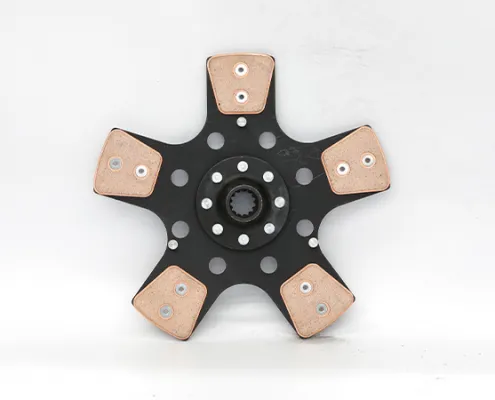
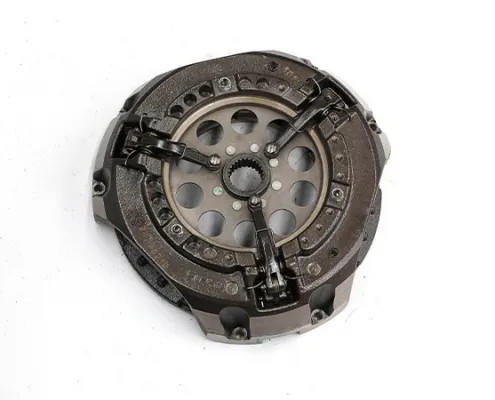
The tractor clutch is mainly composed of an active part, a driven part, a pressing device and a control mechanism. When the tractor clutch is in the engaged state, the pedal is in the high position, there is a gap between the release lever and the release bearing, and the pressure plate presses the driven plate under the action of the compression spring, so that the driven plate and the flywheel are tightly combined, and the engine torque is reduced by the driven disc is transmitted to the transmission.
When the driver steps on the pedal, after the clearance is eliminated through the pull rod, the separation fork and the separation sleeve, the outer end of the separation lever pulls the pressure plate to overcome the pressure of the compression spring and then moves backward, so that the pressure on both sides of the driven plate disappears. As a result, the friction force disappears, the torque of the engine is no longer transmitted to the transmission, and the clutch is in a disengaged state.